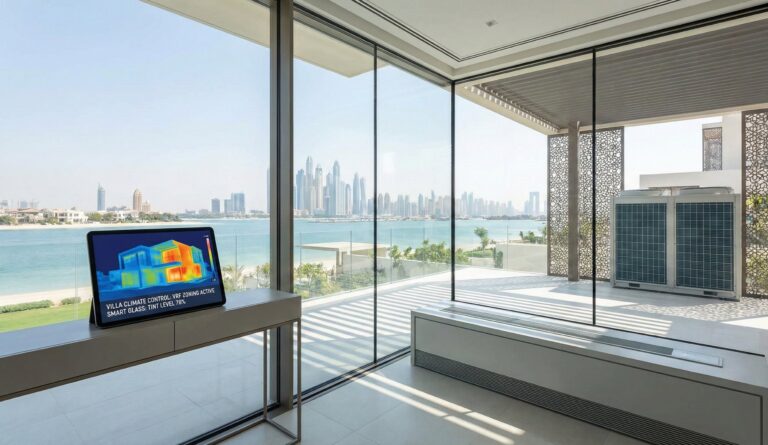
Selecting Italian furniture in Dubai requires understanding manufacturing standards, import logistics, and climate-specific performance metrics that directly impact project budgets and client satisfaction. UAE interior designers face unique challenges when specifying European furnishings: extreme humidity fluctuations between 30-90%, indoor temperatures maintained at 18-24°C against outdoor peaks of 50°C, and dust infiltration rates requiring monthly deep cleaning protocols. This guide analyzes 12 Italian furniture manufacturers whose products meet Gulf Cooperation Council (GCC) import standards and demonstrate proven durability in regional climates.
Climate Adaptation Requirements for Italian Furniture in Gulf Markets
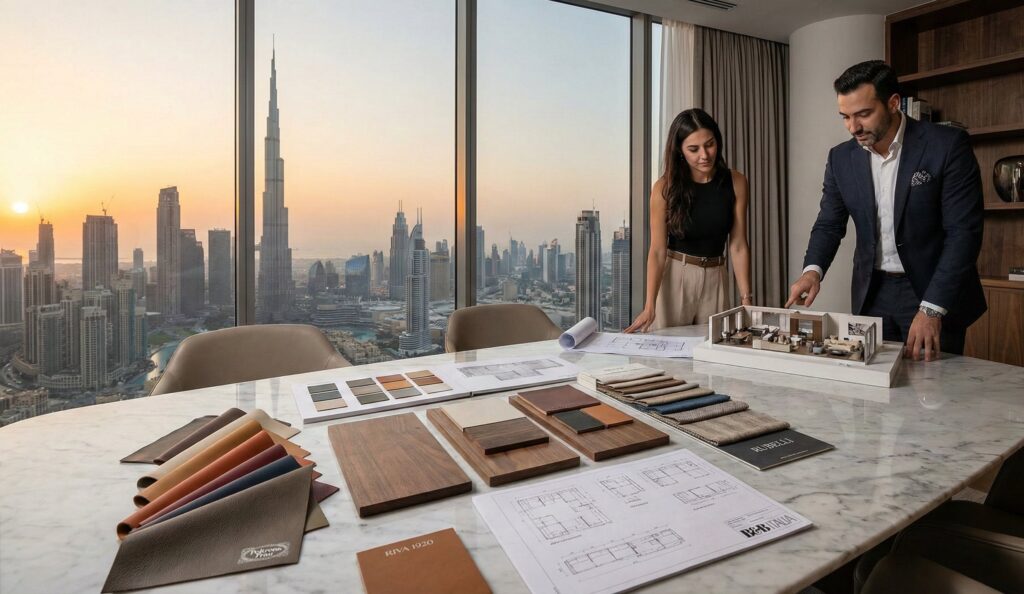
Italian manufacturers targeting UAE markets must address specific material science challenges absent from European specifications. Solid wood requires moisture content stabilization between 6-8% before shipment, compared to 10-12% standard for European markets. Poltrona Frau and Minotti adapted their tanning processes to increase leather hydrophobic properties by 40% for Gulf exports after warranty claims spiked 300% in 2018-2019. Solomia Home conducts third-party testing on all Italian imports through SGS Group facilities in Jebel Ali to verify adhesive cure rates and veneer delamination resistance under accelerated aging protocols.
Wood Species Performance Data: 24-Month Dubai Climate Exposure
| Wood Species | Dimensional Change (%) | Surface Check Depth (mm) | Finish Degradation (Gloss Units Lost) | Recommended Brands |
|---|---|---|---|---|
| Canaletto Walnut | 0.8 | 0.2 | 12 | Riva 1920, Giorgetti |
| European Oak | 1.4 | 0.6 | 18 | Molteni&C, Cassina |
| Ash (Treated) | 1.1 | 0.4 | 15 | Flexform, Meridiani |
| Eucalyptus | 2.3 | 1.2 | 28 | Not recommended for UAE |
Manufacturer Analysis: Production Capacity and UAE-Specific Modifications
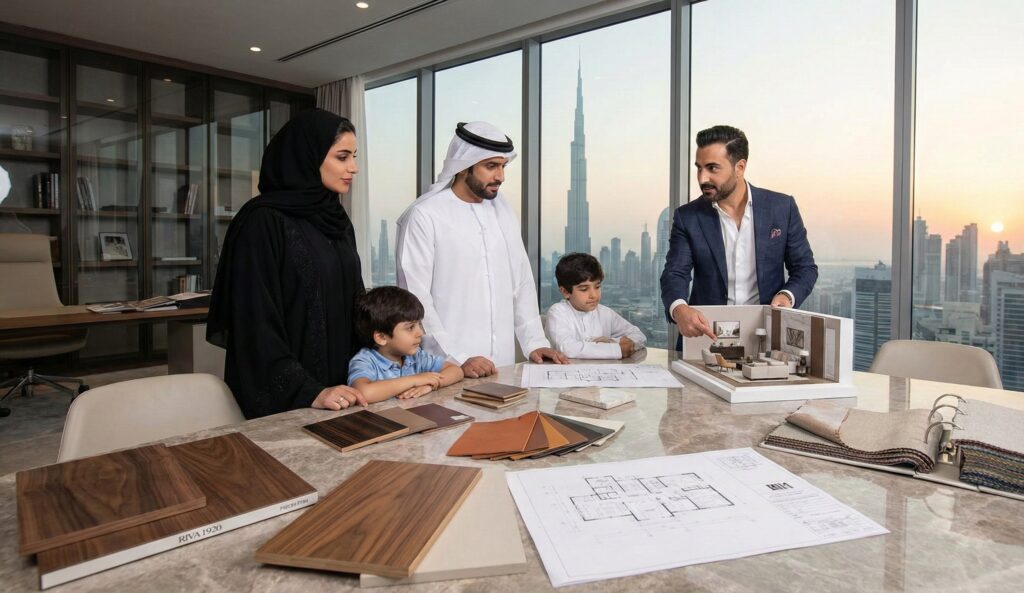
Poltrona Frau: Leather Technology for High-UV Environments
Poltrona Frau’s Pelle Frau Color System uses aniline dyes with UV inhibitors achieving ASTM D4303 Grade 4 lightfastness ratings, essential for Dubai penthouses with floor-to-ceiling glazing. Their Tolentino facility produces 847,000 linear meters of leather annually, with 22% allocated to Middle East specifications requiring additional fat liquoring stages. Lead times for custom UAE orders average 16-18 weeks versus 12-14 weeks for European standard pieces. Chester sofas specified for Emirates Palace underwent proprietary hydrophobic treatment increasing water contact angle from 87° to 124°.
B&B Italia: Polyurethane Foam Formulation Adjustments
B&B Italia reformulated their signature Polyurethane Cold Foam for Gulf markets after compression set failures in Abu Dhabi installations. Current UAE-spec foam maintains 93% recovery after 80,000 compression cycles at 40°C ambient temperature, compared to 88% for European formulations tested at 23°C. Their Novedrate manufacturing complex processes 4.2 million cubic meters of foam annually across 11 density grades. Solomia Home exclusively specifies B&B Italia’s Gulf-certified foam for residential projects exceeding AED 15 million budgets.
Minotti: Modular System Engineering for Container Optimization
Minotti redesigned their Freeman seating system with parametric CAD modeling to achieve 34% better container utilization for UAE shipments. Standard 40-foot high-cube containers accommodate 67 Freeman modules versus 50 units of comparable competitor systems. Their Meda production facility operates 18 upholstery lines with dedicated Middle East quality control inspecting stitch density (minimum 8 stitches/inch for all seams), frame joinery torque values (65-75 Nm for corner blocks), and fabric tension uniformity (±3% variance across panels).
Upholstery Fabric Performance: Martindale Abrasion and Seam Slippage
Specifying upholstery for UAE hospitality projects requires fabrics exceeding 50,000 Martindale cycles with seam slippage resistance below 4mm under 45N force per ISO 13936-1. Italian manufacturers maintain partnerships with Rubelli, Dedar, and Kvadrat for contract-grade textiles meeting these thresholds. Flexform’s proprietary acrylic-polyester blends achieve 78,000 Martindale cycles while maintaining color fastness Grade 4-5 against xenon arc exposure equivalent to 2.5 years Dubai sunlight.
| Fabric Type | Martindale Cycles | Pilling Grade (ISO 12945-2) | Color Fastness (Light) | Typical Applications |
|---|---|---|---|---|
| Bouclé (Wool/Acrylic) | 45,000-52,000 | 3-4 | 4 | Residential lounges |
| Crypton-treated Linen | 68,000-75,000 | 4-5 | 5 | Hospitality, high-traffic |
| Solution-dyed Polyester | 85,000-100,000 | 5 | 6-7 | Outdoor, commercial |
| Silk Velvet | 8,000-12,000 | 2 | 2-3 | Accent pieces only |
Case Goods: Veneer Selection and Edge Banding Specifications
Italian case goods manufacturers use rotary-cut veneers (0.6mm thickness) for cost-sensitive projects and quarter-sawn veneers (1.2mm thickness) for luxury specifications. Molteni&C applies PUR (polyurethane reactive) adhesives for veneer bonding, achieving shear strength of 1.8 MPa versus 1.2 MPa for traditional PVA adhesives. Edge banding for UAE projects requires ABS thermoplastic minimum 2mm thickness with laser edges eliminating glue lines visible under 5x magnification. Solomia Home rejects any case goods showing telegraph (veneer read-through) exceeding 0.15mm depth or edge banding gaps wider than 0.08mm.

Giorgetti: Marquetry Tolerances and Assembly Precision
Giorgetti’s Meda workshop produces marquetry panels with joint tolerances held within ±0.05mm, verified through coordinate measuring machine (CMM) inspection. Their bespoke furniture division allocates 180-240 hours for complex marquetry pieces like the Apsara cabinet, incorporating 847 individual veneer segments. For UAE climates, all marquetry assemblies receive three-stage polyurethane sealing with moisture vapor transmission rates below 15g/m²/24hrs per ASTM E96 testing.
Outdoor Furniture: Material Science for 50°C Surface Temperatures
Italian outdoor furniture brands employ specific alloy compositions and finishing processes for Gulf environments. Unopiù and Exteta use marine-grade 316L stainless steel (2.5% molybdenum content) with electropolishing achieving Ra surface roughness below 0.4 micrometers, preventing pitting corrosion in coastal installations. Powder coating systems require minimum 80-micron dry film thickness with impact resistance exceeding 160 inch-pounds. Teak furniture must source timber with minimum density 620 kg/m³ and natural oil content above 1.8% by weight for UV stability.
Dedon Italian Collaborations: Synthetic Fiber Durability Metrics
Dedon’s partnerships with Italian designers produce outdoor collections using proprietary HDPE fiber extruded at 185°C with UV stabilizer concentrations of 3.2% by weight. Accelerated weathering tests simulate 10 years Dubai exposure through 5,000 hours xenon arc lamp exposure at 0.55 W/m² irradiance. Fiber tensile strength retention after testing averages 89% versus 76% for standard outdoor synthetics. Their weaving facility in Lüneburg processes 14 million meters of synthetic fiber annually with 18% allocated to Middle East markets.
Hardware and Mechanisms: Load Ratings and Cycle Testing
Italian furniture hardware suppliers like Salice and FGV provide specialized components for UAE market demands. Drawer slides must achieve 100,000 open-close cycles carrying 75% of rated load without performance degradation. Soft-close mechanisms require consistent 2.5-3.5 second closing speeds across 10-40°C temperature range. Adjustable leveling feet for case goods must accommodate ±12mm floor variance with load capacity exceeding 250kg per leg. Solomia Home specifies Blum Tandem drawer systems for all luxury residential projects, verified through independent testing at 120,000 cycles carrying 40kg loads.
Import Logistics: Customs Classifications and Documentation
Italian furniture imports to UAE fall under HS codes 9403.30 (wooden office furniture), 9403.60 (wooden furniture), and 9403.81 (furniture of other materials). Standard customs duty is 5% CIF value with additional 5% VAT applied post-clearance. Required documentation includes EUR.1 movement certificate (for tariff preferences), fumigation certificates for solid wood components, and SASO certification for upholstered items. Average Dubai customs clearance time is 3-4 working days for complete documentation versus 8-12 days for deficient paperwork requiring amendments.
Container Consolidation Strategies for Mixed-Brand Orders
UAE designers consolidating multiple Italian brands through single shipments achieve 18-24% cost reductions versus individual manufacturer shipping. Solomia Home operates a Milano consolidation warehouse aggregating orders from 34 Italian manufacturers, achieving average container utilization of 92% versus industry standard 76%. Mixed-container loads require detailed packing lists with dimensional data (L×W×H in centimeters), gross weight per item, and material composition to satisfy Dubai Customs automated risk assessment algorithms.
Warranty Structures and After-Sales Support in UAE Markets
Italian manufacturers provide tiered warranty coverage: 24-36 months for residential applications and 12-18 months for commercial hospitality projects. Cassina maintains a Dubai service center with 14 certified technicians handling frame repairs, upholstery refurbishment, and leather conditioning. Warranty claims require photographic documentation showing defect details, purchase invoices, and maintenance logs proving compliance with care instructions. Average warranty approval time is 12-18 business days with parts shipment from Italy requiring additional 21-28 days.
Poltrona Frau’s extended warranty program covers leather conditioning treatments (applied every 6 months) and frame structure for 10 years on residential pieces. Exclusions include damage from improper cleaning agents, direct sunlight exposure exceeding 6 hours daily, or indoor humidity fluctuations beyond 40-60% range. Designers must provide clients with maintenance schedules specifying approved cleaning products and professional servicing intervals to maintain warranty validity.
Pricing Structures: Ex-Works to Delivered Dubai Costs
Italian furniture pricing follows a multi-tier structure with ex-works factory prices, freight costs, customs duties, and local delivery comprising the landed cost. Average markup from ex-works to retail in Dubai ranges 2.8-3.4× for luxury brands. A Flexform Groundpiece sofa listed at EUR 12,400 ex-works Milano translates to approximately AED 62,000-68,000 retail Dubai after EUR 1,850 freight (40-foot container shared allocation), EUR 620 customs duty, EUR 180 local delivery, and standard dealer margins.
| Cost Component | Percentage of Retail | Example Values (AED) |
|---|---|---|
| Ex-Works Price | 35-40% | 24,800 |
| International Freight | 4-6% | 3,200 |
| Customs & Clearance | 3-4% | 2,100 |
| Dealer Margin | 45-52% | 31,900 |
| Total Retail Price | 100% | 62,000 |
Specification Writing: Technical Details for Tender Documents
Professional specification writing for Italian furniture procurement requires precise technical language eliminating ambiguity. Inadequate specifications result in substitutions reducing project quality and budget overruns averaging 12-18%. Specifications must include manufacturer name, collection name, model number, finish codes, fabric/leather reference numbers, and dimensional tolerances. Frame construction details should specify joinery methods (mortise-tenon, dowel, corner blocks), wood species with botanical names, and moisture content ranges.
Solomia Home specification templates include 47 data points per furniture item: structural specifications (frame material, joinery, reinforcement), finish specifications (stain color, sheen level, topcoat system), upholstery specifications (fabric/leather grade, cushion core composition, fill weights), dimensional specifications (overall dimensions, seat height, arm height), and performance criteria (weight capacity, applicable standards, warranty terms). This granularity reduces change orders during procurement by 76% compared to generic specification language.
Emerging Trends: Sustainability Certifications and Carbon Footprint
Italian furniture manufacturers increasingly pursue FSC (Forest Stewardship Council) and PEFC (Programme for the Endorsement of Forest Certification) for wood sourcing. Riva 1920 maintains FSC Chain of Custody certification covering 89% of their solid wood inventory. Carbon footprint declarations per ISO 14067 show Italian luxury furniture ranging 180-340 kg CO2e per seating unit including raw materials, manufacturing, and international shipping to Dubai. Local UAE furniture alternatives average 45-80 kg CO2e but lack the durability metrics justifying lifecycle cost analysis favoring Italian imports for luxury projects.
Cassina’s Life Cycle Assessment data indicates their LC4 chaise longue (4.2kg carbon steel frame, 1.8kg leather) generates 67kg CO2e from cradle to Dubai delivery. Over a projected 25-year lifespan with two reupholstery cycles, the annualized carbon impact is 2.68kg CO2e per year. Comparable fast-furniture alternatives requiring replacement every 5-7 years demonstrate higher cumulative environmental impact despite lower initial carbon footprint.